

Hi, All,
I would like to share further details on a few key concepts from my Helicopter Journey Roadmap (posted at Thingiverse.com) to help new students succeed in the SO helicopter event.
Start the Build Soon:
For new competitors, the most important action is to pick a proven Science Olympiad (SO)-specific design, or the best kit, and start your build immediately. (A quick note: I’ll explain why borrowing or scaling a design from other competition classes is a bad idea soon.)
As the Roadmap stresses, success comes from mastering tasks sequentially: Build, then Fly, then Design. Focus in each stage is essential. Trying to improve a design before you can build or fly it well is a recipe for frustration. Simply put, building problems will render any flying improvements insignificant, and flying problems will obscure the effects of any design changes.
Master the Build Stage: Weight and Drag
The primary goal in the build stage is minimum weight while maintaining structural integrity. Every bit of excessive weight reduces the amount of rubber band (which is your precious energy source) your helicopter can carry. We must build our competition helicopter as light as possible. We’ll use clay later to reach the official minimum weight and lower the center of gravity for stability. More on stabilities (plural!) in the future.
We also need to build our helicopters to spec, meaning with the highest possible accuracy. While precision jigs like those from my OpenSCAD Rotor Jig programs (check them out if you have not!) can help, many students overlook a critical aspect of building: covering.
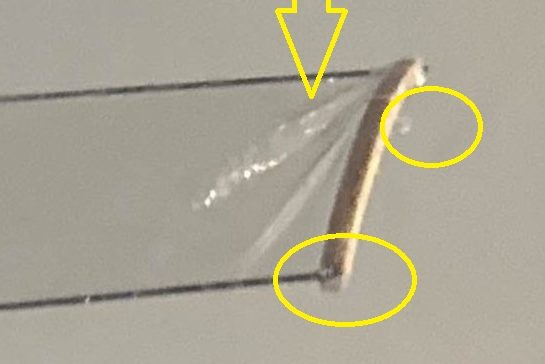
Examine the photos below. Though the covered rotor seems acceptable from a few feet away, its flaws become clear when we close in. Our goal should be a neat, smooth covering job and the absolute elimination of all flapping and loose material on the rotor. Think about holding a flag out of a moving car: The drag produced by a fluttering flag far exceeds that of its flagpole and the surface friction of a static (still) flag. This fluttering effect is massive and will destroy our flight time very quickly. Get rid of, or firmly affix, all loose covering on the rotor blades!
Stay Tuned for Corners
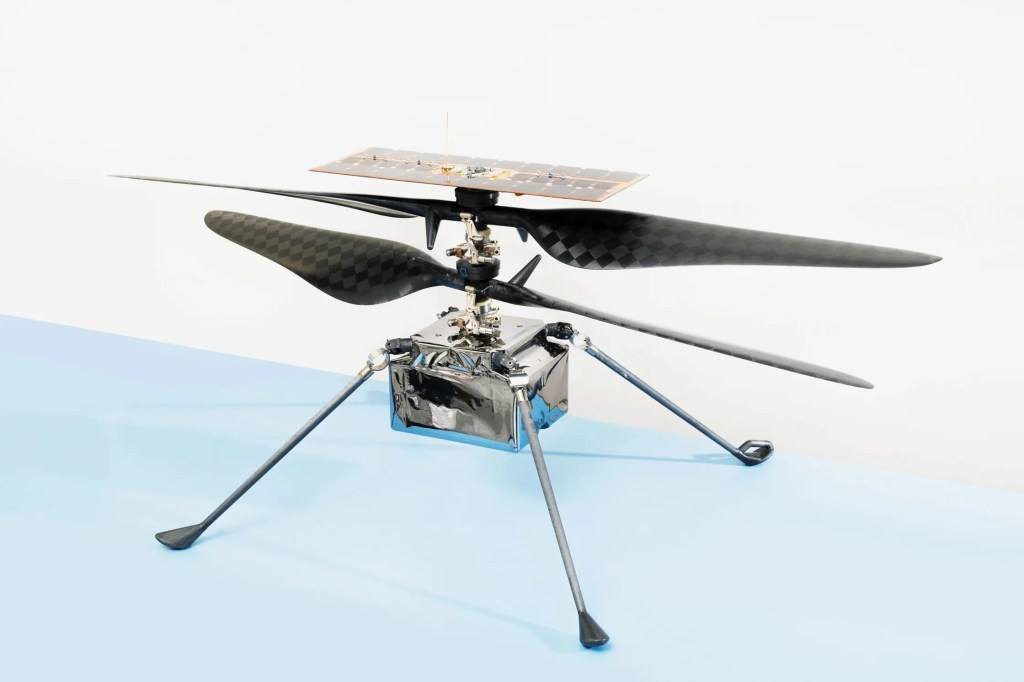
Next time, I’ll talk about “corners.” Since air molecules don’t like sharp turns, you won’t see sharp corners on high-performance rotors, (e.g. NASA Mars Ingenuity. Photo below.) Yet, our SO helicopter rotors often have them! Shouldn’t we be building streamlined rotors instead?! Get ready! We’ll soon learn the secrets behind last year’s National-winning rotors!
I hope this kind of brief articles help you with your helicopter journey. Click on the LIKE button if you like it. Feel free to leave a comment below or contact me via email with any questions. Happy to help!
Cheers!
-AeroMartin 10/20/2025



 StarImagineering
Leave a comment