
“What does it take to make a custom aircraft that actually works?”
“How do I stop building someone else’s plane and start designing my own?”
“What are the top 3 most important skills to design ur own sicoly airfrcaft?”
Designing your own Science Olympiad aircraft is a big and exciting step. At this stage, you are moving beyond simply building a kit or pulling rubber bands and into the deeper work of understanding why your airplane behaves the way it does. The skills you need are built on physics, aerodynamics, and the ability to analyze both the rules and the unique personality of your design. While full-scale designers rely on wind tunnels and simulations for analysis, Science Olympiad planes are so small and so sensitive to rubber variations and tiny construction differences that these complicated tools are more useful qualitatively than quantitatively. They might point you in the right direction, but they won’t tell you exactly how much to change. Your best analysis tool is your own eyes and your own testing. Careful observation becomes your wind tunnel. The more flights you watch and the more patterns you notice, the stronger your design instincts become, and the better your next iteration will be.
Build a plane, fly it, and see whether it behaves the way you expected. Break the flight into three phases and project the flight path onto the three planes of motion so you can focus on one issue at a time. When you separate the concerns, the next design change becomes more obvious. Each small improvement adds up, and you will see your designs grow more consistent and more capable.
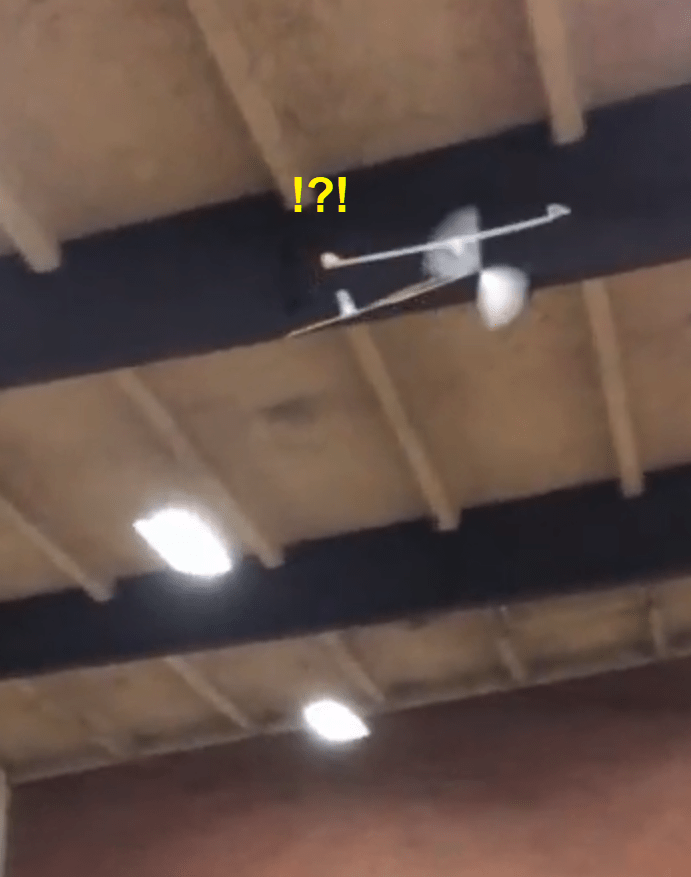
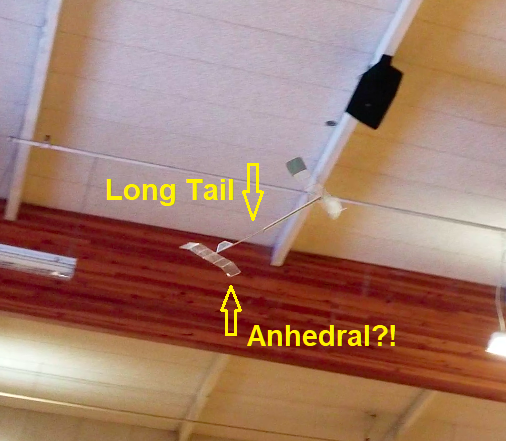
Becoming a designer means learning to embrace the “failed” flights just as much as the record breakers. When a wing tip drags or the plane spirally dives, you are not just seeing a mistake, you are seeing physics in action. When a ceiling bump leads to a dive and recovery (or not!), you are seeing exactly why you might need to adjust your CG location and/or the decalage of your airplane. Every time you identify exactly which part of the airframe caused a specific behavior, you graduate from being a builder to being an engineer. As you identify the “why” behind every flight behavior, you move beyond just building a kit. You are learning to speak the language of your aircraft.
The most successful designers are the ones who keep a detailed log of not just the times, but the “why” behind the numbers. Tracking how a shift in the center of gravity affects the climb or how slight washin helps counter a big propeller will give you the data you need to make bold choices later. This record of trial and error is what transforms a collection of balsa wood into a high performance machine.
Curiosity drives this event forward. Questions about design choices, unusual configurations or unconventional ideas often lead to the most interesting breakthroughs. Topics like why canards are rare in Wright Stuff or whether a flying wing could work are not just fun to explore, they also push the whole community to think more creatively. When students ask bold questions, everyone benefits, because those questions open the door to new approaches and better designs. If you are wondering about a specific design tweak or have a “what if” idea that seems a bit wild, send it my way. Your questions help us all see the air a little more clearly!
Keep going and stay curious. Every flight teaches you something new, and each insight brings you closer to the aircraft you imagined.
Good luck!
-AeroMartin 4/21/2026
 StarImagineering
Leave a comment