
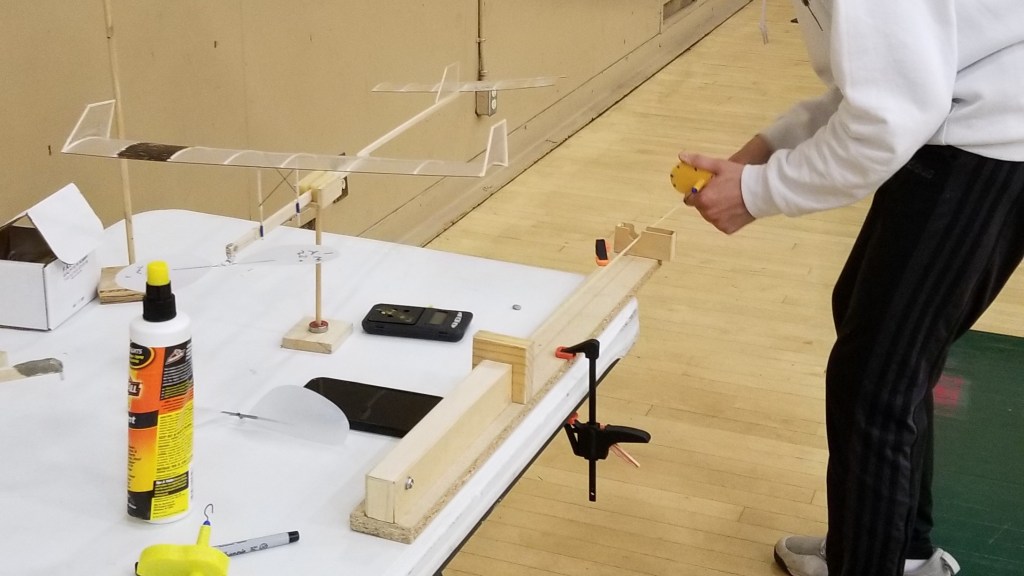
If you have ever competed in a Science Olympiad flight event like Wright Stuff, you know the exact sound that strikes fear into the heart of every competitor.
*CRACK—*like a tiny whip snapping against exposed fingers—followed immediately by a sharp, agonizing cry: “OUCH!!”
It’s the sound of a rubber band exploding at peak turns, milliseconds before an official flight. For many competitors, winding a rubber band feels less like science and more like playing hot potato with a tiny, high-tension bomb.
The standard, “textbook” approach to winding reads like a strict recipe. You plug your rubber band’s parameters—thickness, mass, and length—into a precise online spreadsheet, and it spits out a magic maximum number of turns. From there, it’s all formulas: stretch the rubber to X times its relaxed length, wind to Y% of the maximum before slowly walking in toward your torque gauge, and stop dead on Z turns.
It’s a proven method. It works beautifully for students who have zero fear of a broken band and can master every minute detail under pressure.
But what if that rigid approach is actually building a baseline of anxiety?
Even among students who reach the State and National levels, I often see a profound frustration and fear of winding. Under the high pressure of a major competition, even after succeeding dozens of times in practice, the anxiety of hitting that “magic spreadsheet number” can cause a slip, a snapped band, and a ruined flight. When you treat a spreadsheet cell as the ultimate goal, every snapped rubber band feels like a failure. It builds tension—not just in the rubber, but in the competitor.
That is why I teach a completely different approach. I don’t give my students a hard target. Instead, I give them a fuzzy indicator.
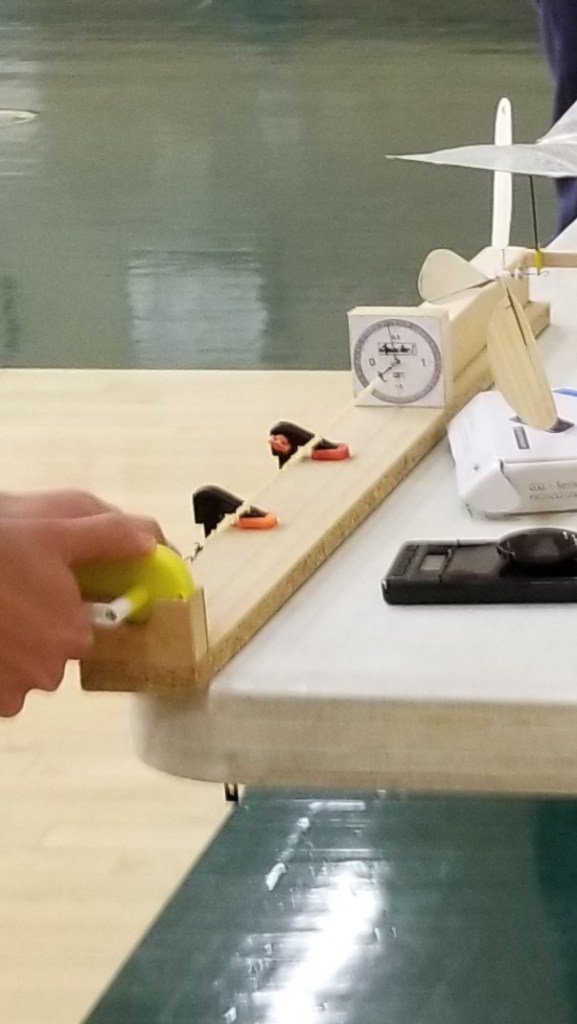
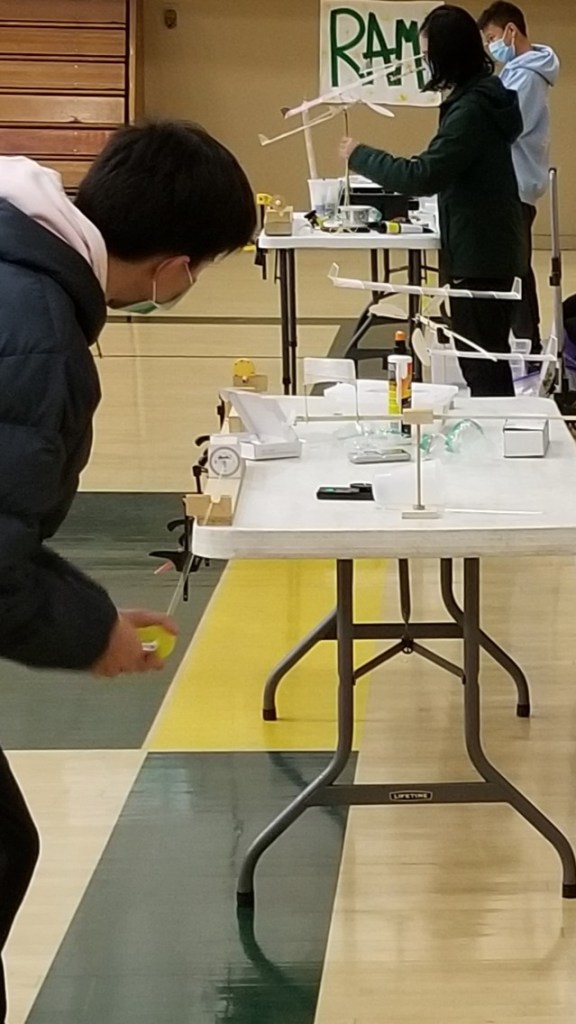
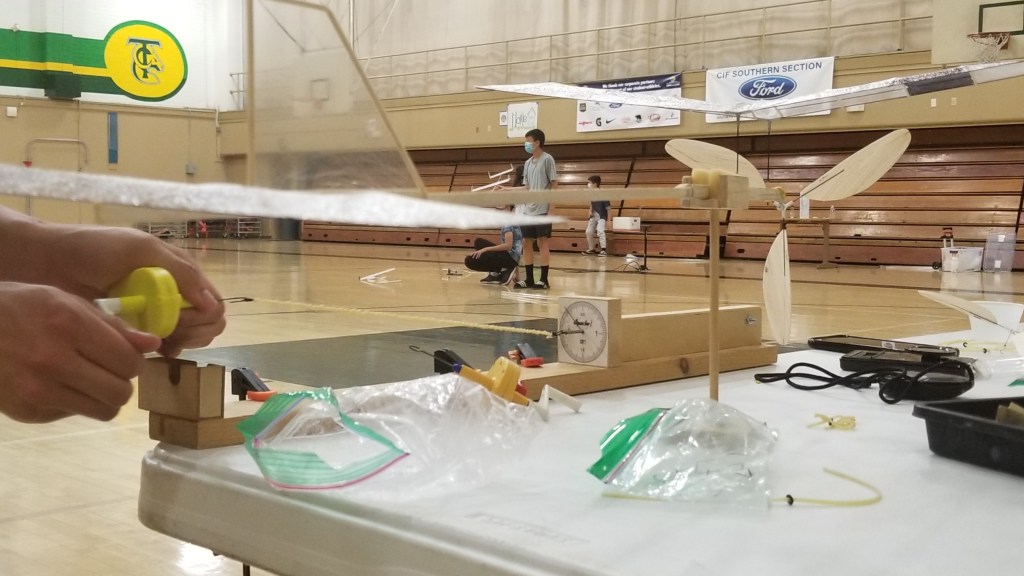
My instructions are simple: Stretch it as far as you feel comfortable. Watch the torque meter closely. Stop winding the exact moment the needle starts to jump.
When new students start with this method, they understandably ask a lot of questions:
“How hard is hard enough?”
“How many oz-in of a jump is too much?”
My answer? “It depends.”
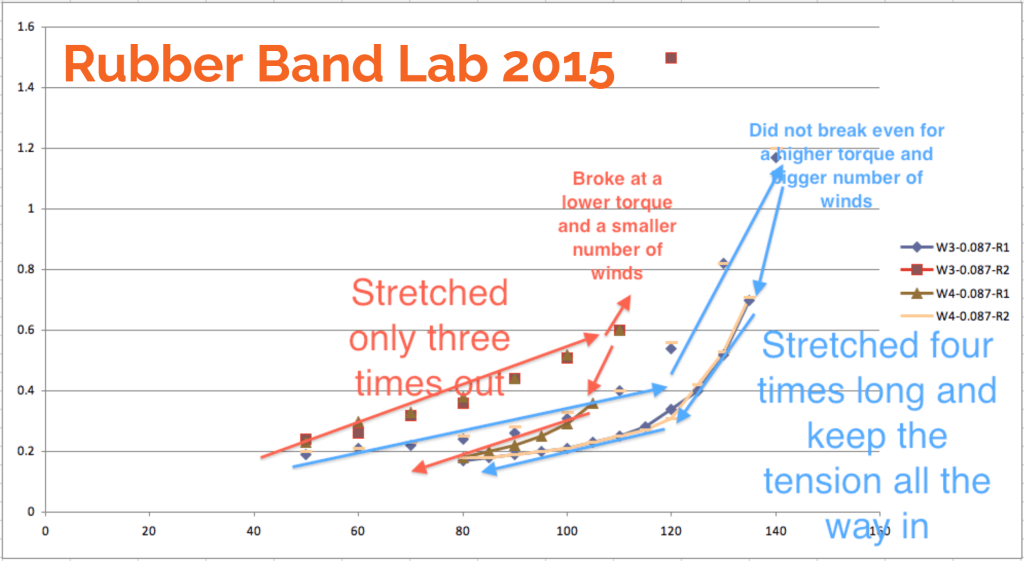
I give them a rough, ballpark number based on experience, but I leave the control entirely in their hands. This hands-on approach is how they truly begin to understand rubber band hysteresis. You can’t learn how a specific batch of rubber stores, holds, and returns energy under tension by staring at a static chart. They need to physically feel the torque resistance. At first, all students wind very cautiously. But more importantly, they wind successfully. They aren’t pushing past their comfort zone to hit an arbitrary goal; they are learning to listen to the rubber and the gauge.
Eventually, a fascinating thing happens. Because they feel comfortable and in control from the very first turn, the fear disappears. Success builds on success. Incrementally, flight after flight, they start adding more turns. They naturally discover the boundaries of the material, finding their own optimal way of winding.
This shifts the focus from “chasing the field” to chasing your own personal best—which is where real competitive success actually comes from.
I learned this lesson clearly with my very first Wright Stuff team back in 2015. When we started building and flying, we were completely in our own bubble. We had no idea what other teams were achieving, and we didn’t bother checking what the state or national records were. Discord and Duosmium simply did not exist. On our very first full flight, the plane stayed up for 2 minutes and 30 seconds. We were completely surprised and genuinely happy with what we had built.
Of course, the journey wasn’t a straight line up. We hit plenty of low moments and frustrating sessions over the season. But because we weren’t comparing ourselves to an invisible standard, we just kept focusing on our own progress. We found better ways to wind, discovered better ways to trim, and eventually pushed our practice times past the 4-minute mark. When competition day came, the students flew without fear, ultimately placing 2nd at Regionals and 2nd at SoCal States with a raw time of 3:15.
We didn’t win those medals by trying to beat everyone else; we won them by being entirely focused on improving ourselves. Feeling happy about your own incremental growth is what keeps the fear away.
I recently wrote about this philosophy in my article, A Simple Practice Strategy for Steady Improvement. In flight—as in life—trying to instantly maximize everything to “beat the field” often leads to breaking under pressure.
For many students, focusing on being a slightly better, more dialed-in version of yourself every single day is a far more powerful strategy than treating every flight as an all-or-nothing gamble. Don’t let a spreadsheet dictate your limits. Build your foundation, celebrate your personal milestones, and let your confidence stretch your limits one turn at a time.
Clear ceilings and happy flying,
-AeroMartin 6/26/2026


Leave a Reply