
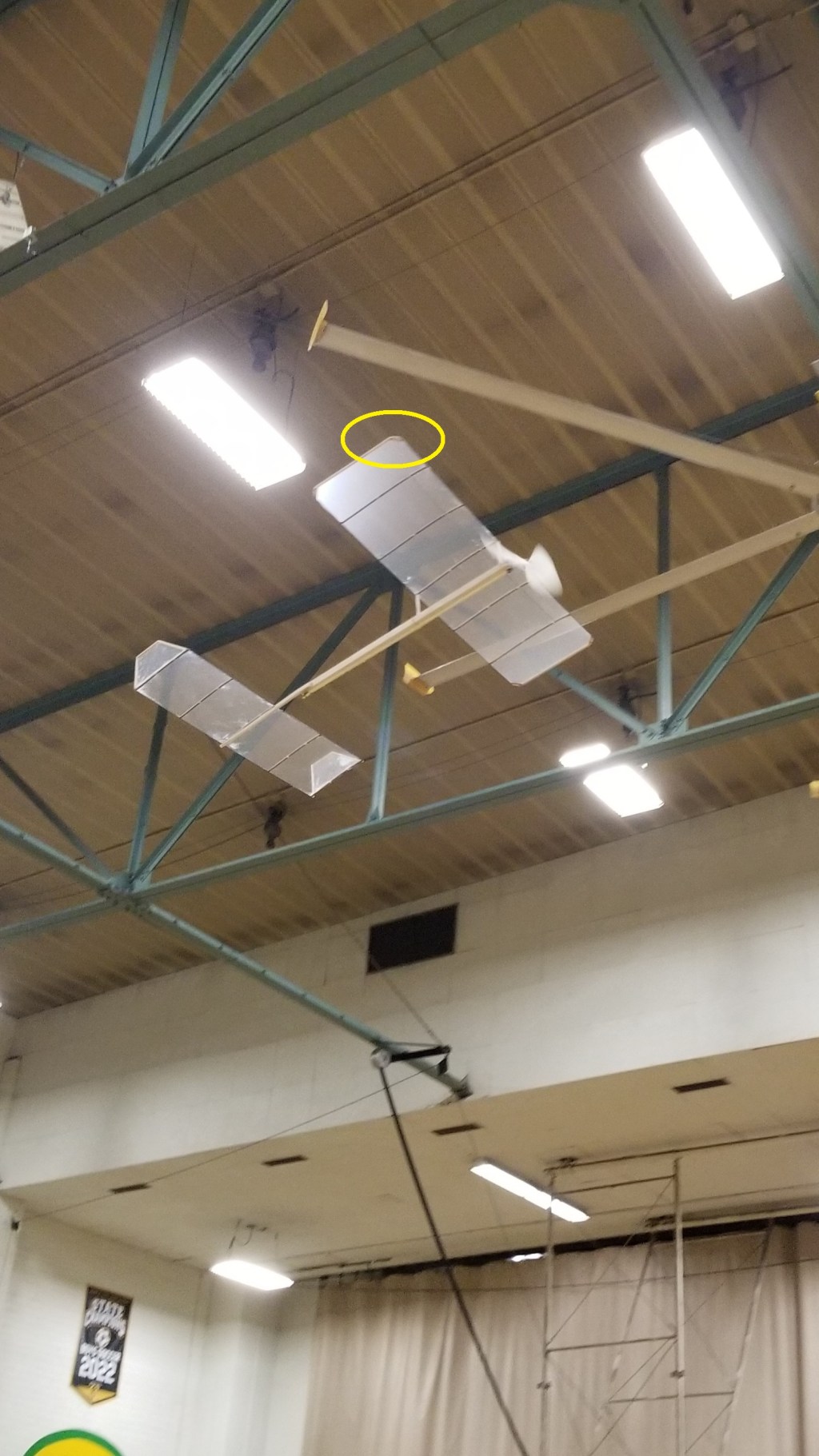
“Would u have any suggestions on when it is appropriate to use wing tip plates or just simply rounding corners.”
That is a fantastic question that many designers run into. Tip design affects wing efficiency in a big way, so let us look at the physics of a Wright Stuff airplane through a few quick Q&As before getting to the final breakdown.
Q: What is the goal of a Wright Stuff competition?
A: The longest flight time wins.
Q: What are the major rules and limits?
A:
- Weight: 8.0 plus 1.5 grams, which is quite heavy compared to other indoor free flight competition models.
- Size box: Limits the maximum wingspan and indirectly limits the wing area.
- Rubber band: 1.5 grams, meaning every design carries a strict, limited amount of energy.
Q: What forces do we need to generate in order to fly a Wright Stuff airplane?
A: Lift, thrust, and centripetal force to keep it turning. Weight is caused by gravity. Drag is a by-product of air molecules turning.
Q: What wastes energy when a Wright Stuff airplane flies?
A: Drag and unnecessary counteracting forces. Examples include tilted wing panels from a steep dihedral, or a tail pushing downward, though most proper WS designs actually use a lifting tail.
Q: What makes an efficient Wright Stuff airplane?
A: A design that turns stored rubber band energy into forward thrust, using the wings to carry the combined weight, with the least amount of drag and wasted energy possible.
Q: Do simple flat wingtip plates help or hurt performance?
A: Because they meet the wing at a sharp right angle, they create extra interference drag, on top of the extra parasite drag created by their excessive surface area. The plane has to use precious energy to fight these unnecessary drags, which results in a shorter flight time.
Q: Why do some kit planes include wingtip plates?
A: You would have to ask those kit designers! Look around at other advanced indoor free flight models or full scale planes. You rarely see simple flat wingtip plates on efficient designs.
Q: Don’t wingtip plates add lateral/rolling stability?
A: Yes, but not as effective as dihedral. Besides, do we need extra rolling stability? A high wing design already has plenty of natural rolling stability. Remember, stability is not the goal in Wright Stuff. Long flight duration is.
Q: What do rounded corners at the wingtip do?
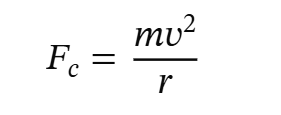
A: Rounded corners smooth out the airflow where pressure differences try to force air around the edges. Air molecules have to make a turn here. Using the circular motion centripetal force formula (below), a larger turning radius means a smaller required force and less drag.
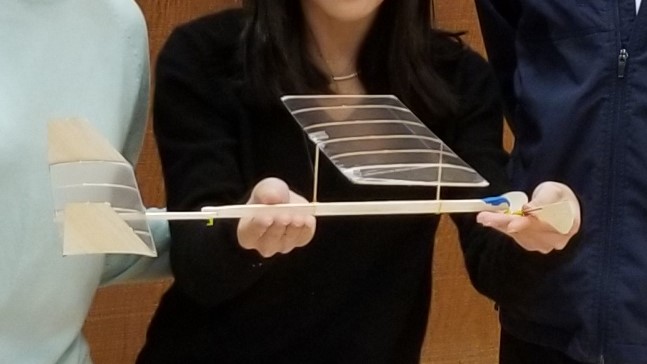
Q: So why have flat plates on the tail?
A: First, that flat plate on the tail is actually called a vertical fin or a rudder, rather than a wingtip plate. It sits at a specific distance from the center of gravity, which is the moment arm, meaning it functions very differently than a wingtip plate. Second, airplanes rely on the vertical fin for directional stability. Without vertical fins, regular darts, rockets, and airplanes cannot fly straight.
Winglets are properly designed wingtip devices rather than slap-on flat plates. These modern winglets were popularized in the 1970s, but have since been replaced by extended wing rakes or whole wing designs.
Unlike optional winglets, almost all airplanes have a vertical fin. Some flying wing aircraft like the B-2 bomber, and birds, have no traditional vertical fins. Instead, they control their direction using advanced aerodynamic forces, such as differential drag and proverse yaw. (See NASA’s Prandtl-D Flying Wing project on the Internet.)
Lastly, interference drag can occur right where the vertical fin meets the tail wing or the fuselage, so designers use proper blending and fillets to reduce this drag as much as possible.
Summary: Why Choose Rounded Corners Over Flat Wingtip Plates?
- To Avoid Extra Drag: Sharp 90 degree corners create messy, turbulent air mixing. Simply rounding out these transitions eliminates sharp angles and helps the air flow smoothly.
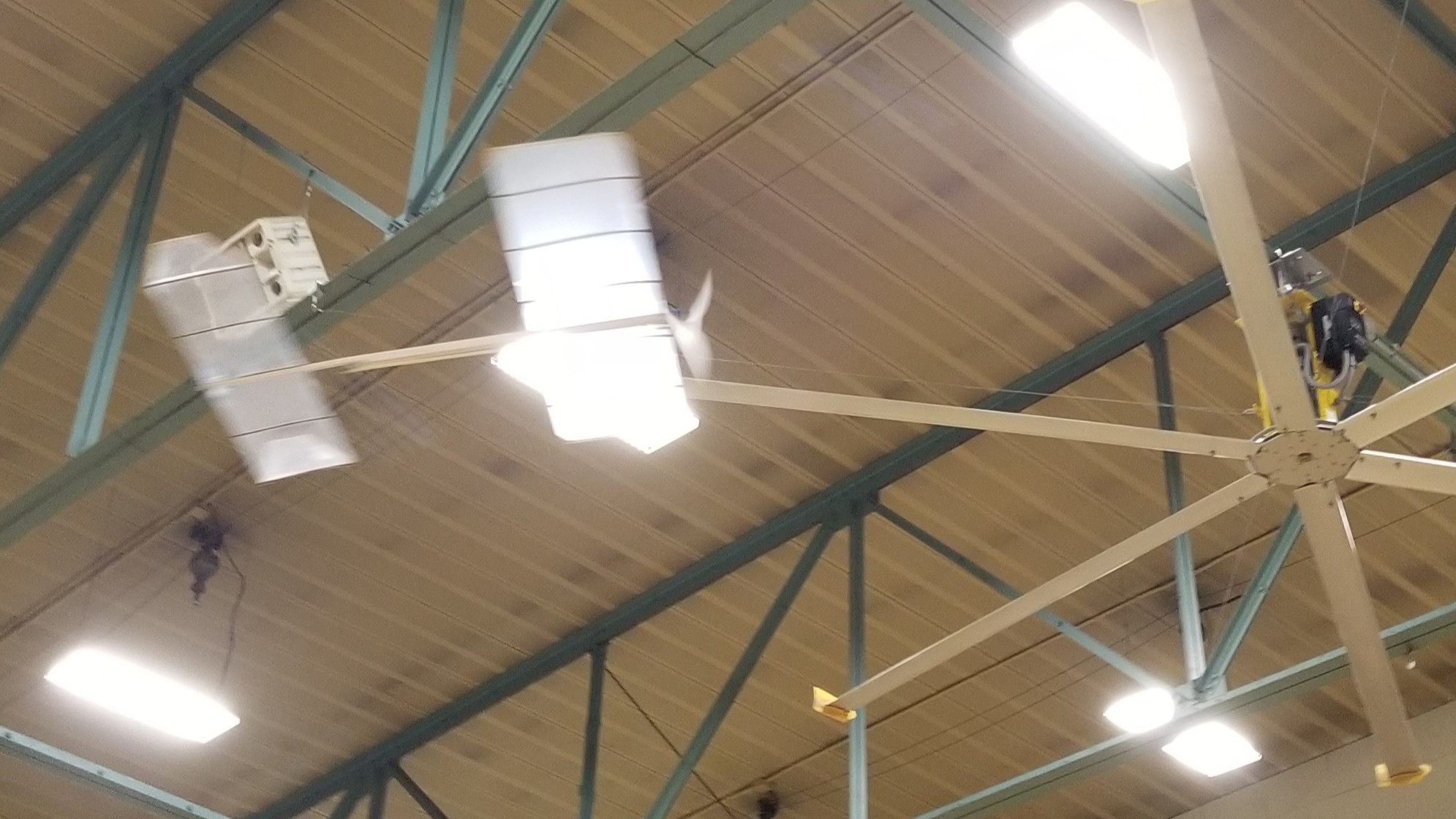
- For Flying in Circles: Science Olympiad planes fly in tight circles. The outside wing travels faster than the inside wing, and flat tip plates act like high drag fences that fight efficiency. Advanced designs prefer clean transitions and streamlined curves, similar to race cars and bullet trains.
- For Maximum Efficiency: If your goal is top performance and maximum flight time, avoiding extra vertical plates keeps the airflow clean and saves every bit of energy you can get from your rubber band.
I hope this set of Q&As helps clear things up for your builds. Let me know if you have any other questions down below! All comments are welcome.
Cheers!
-AeroMartin 8/27/2026



Leave a Reply