
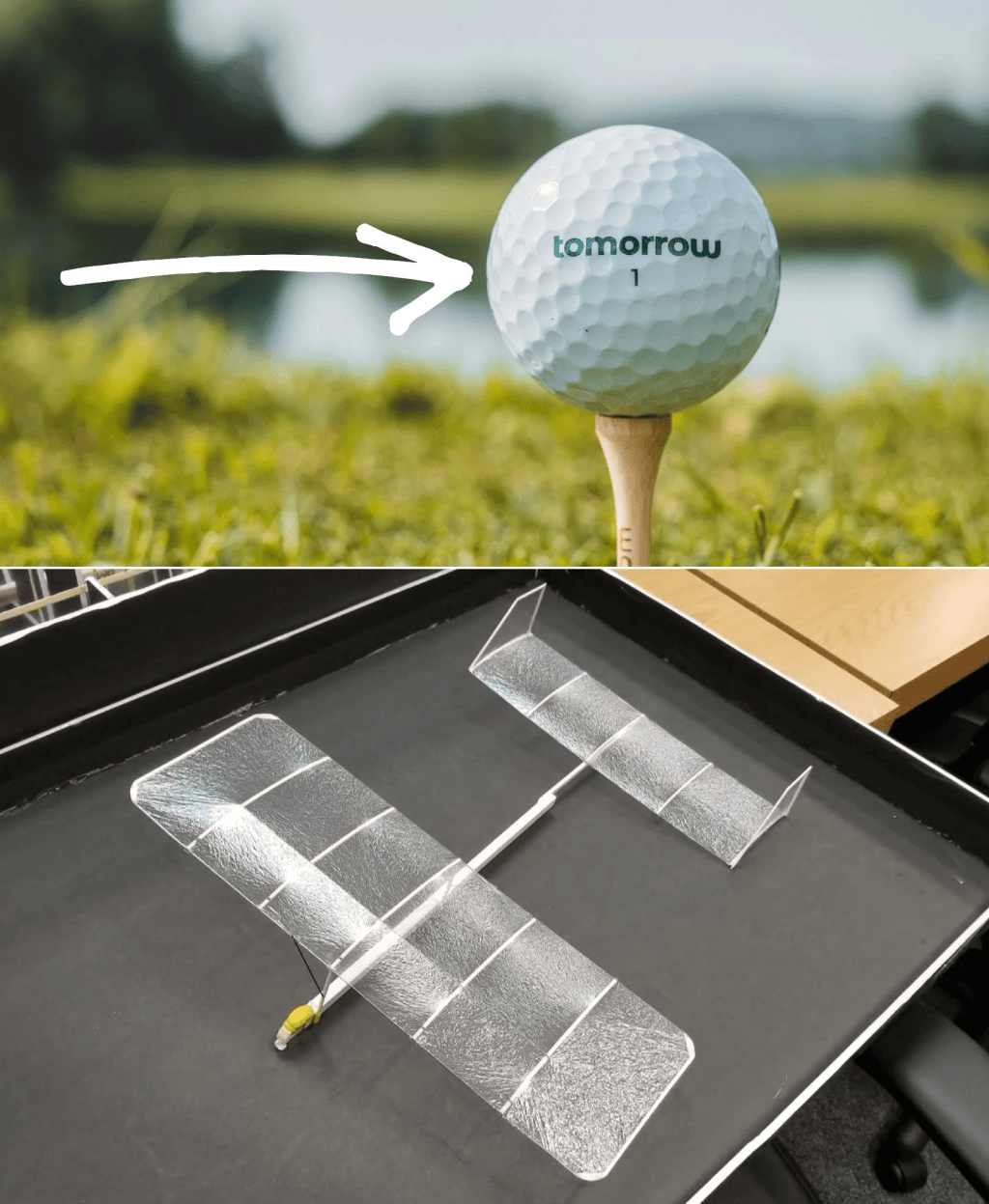
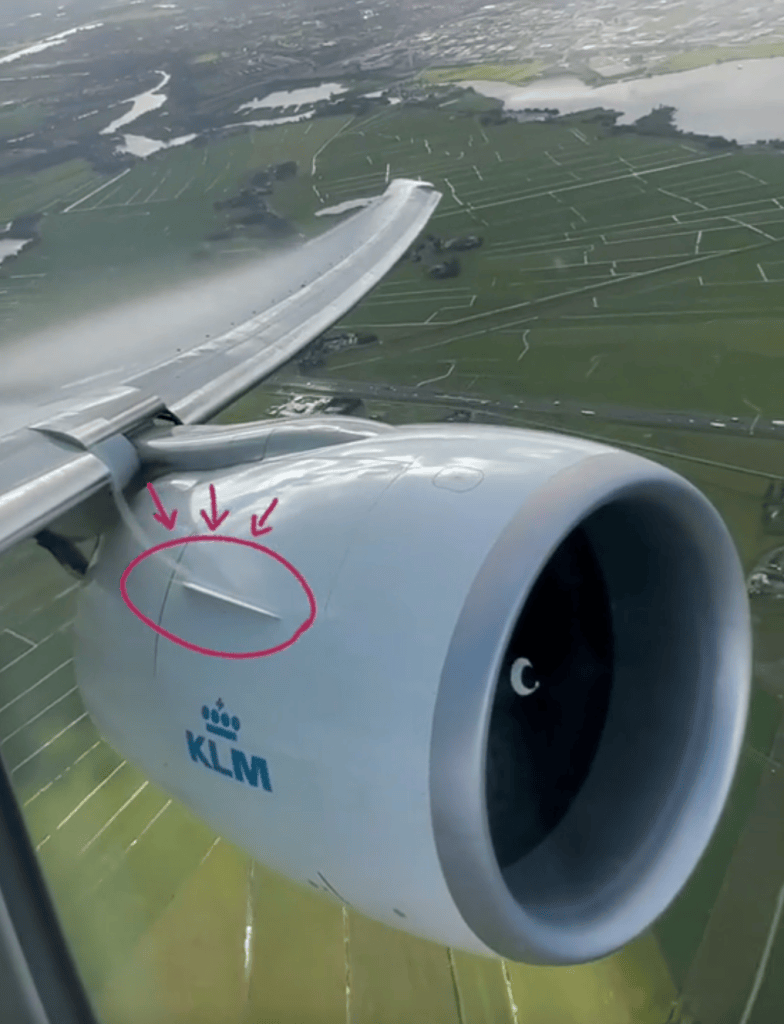
“I had recently watched some very interesting videos about flight related dynamics. One of the videos I watched was about the dimples of a golf ball and how those dimples induce turbulence that helps reduce separation. In that video, they state that the dimples help ‘re-energize’ the boundary layer. What does it mean to reenergize the boundary layer? Also, physically why does friction cause fluids to stick to a surface? Finally one last question, in the same way golf balls energize the boundary layer, do nacelle strakes in airplanes induce turbulence for the same purpose?”
These are fantastic questions!! They actually touch on some advanced topics in aerodynamics. To really understand them, it helps to start by looking at laminar versus turbulent flow, and the classic experiments by Osborne Reynolds. (See the first few sections on this wiki page.)
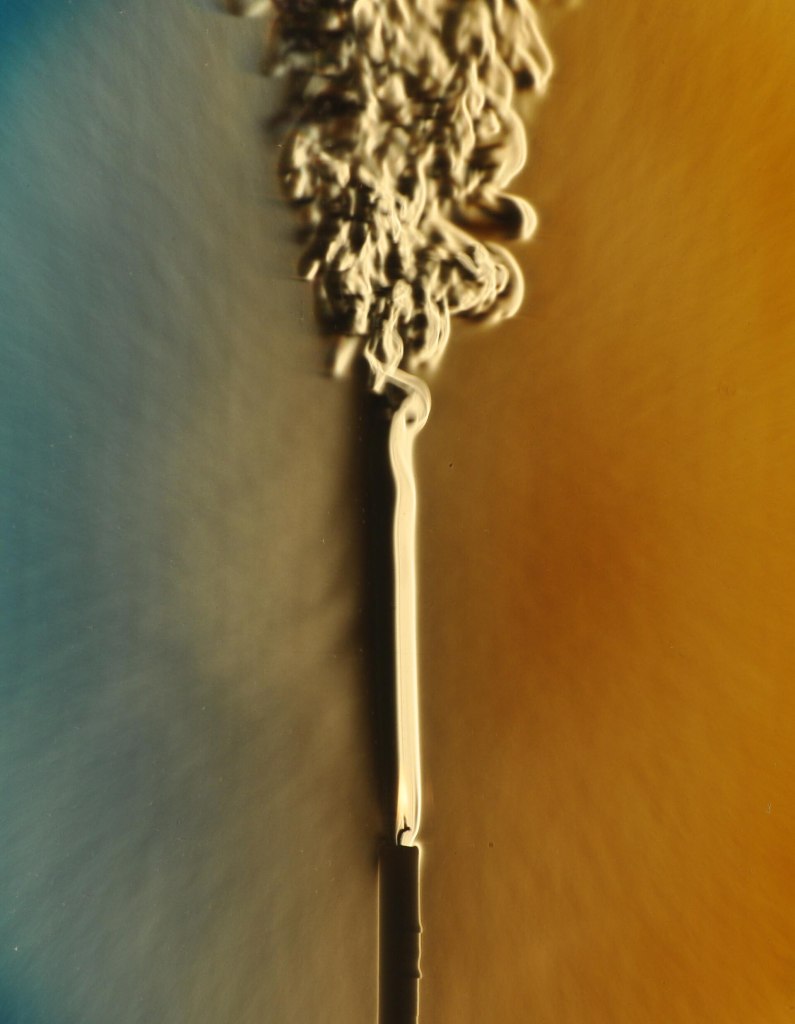
Here is how it all connects:
1. Why fluids stick and lose momentum
At a microscopic level, fluid molecules interact with and grab onto the molecules of a surface, which is why friction causes fluids to stick. As air moves past an object, this friction creates a slow-moving layer of air called the boundary layer. Because of friction, the flow lines in this layer constantly lose momentum and energy.
2. Re-energizing the boundary layer and golf balls
Laminar flow is smooth, but it separates easily. When a video talks about “re-energizing” the boundary layer, it means mixing faster-moving air from the outer stream down into that slow, sticky layer. Turbulent flow carries more energy and helps delay separation. That is exactly why golf balls have dimples: they trigger a bit of turbulence that delay the separation, which, as a whole, has less drag, and helps the ball fly much farther!
3. Nacelle strakes
You nailed your final question. Yes, nacelle strakes on airplanes create controlled turbulence for that exact same purpose, helping keep the airflow attached to the nacelle surface during nose-high low-speed maneuvers.
A Fun Connection to Our Indoor Flight
Indoor free flight airplanes fly at a much smaller Reynolds number than full scale airplanes. At this scale, the air behaves almost like flowing honey. It has less energy and separates from the surface very easily. Because of this, most indoor models, include many WS airplanes, have to fly with a smaller angle of attack and a faster speed to avoid stalling, which deviate from our goal, slow but not too slow speed. (See my post here.)
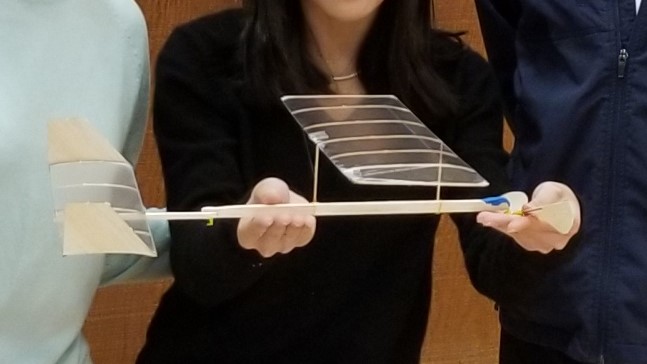
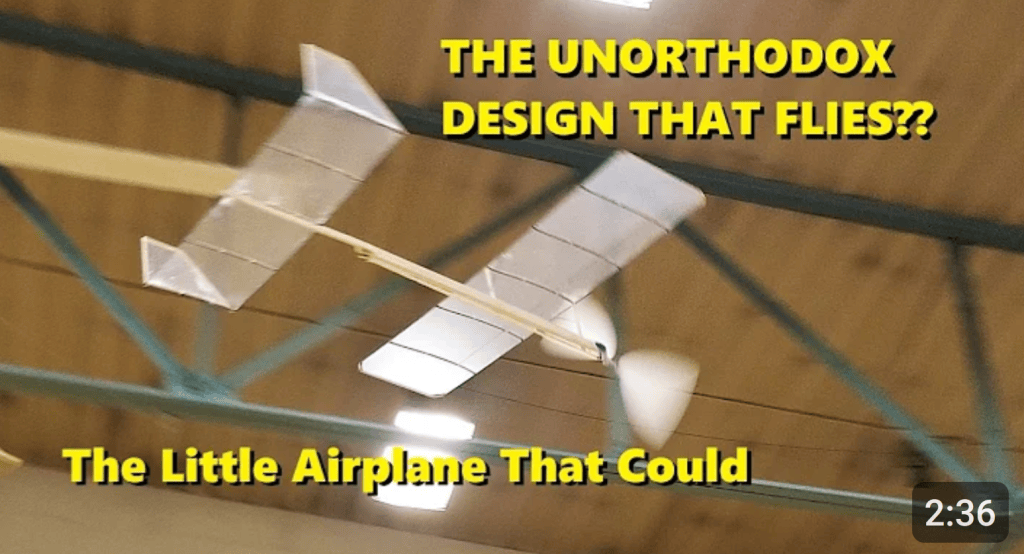
On my original Apache23 and Apache24s, I had a high-point spar. This acts like an ‘energizer‘ and lets the airplane fly with a nice, nose-high attitude. You can see these slow, elegant flights in the Apache23 and the 2023-2024 workshop videos.
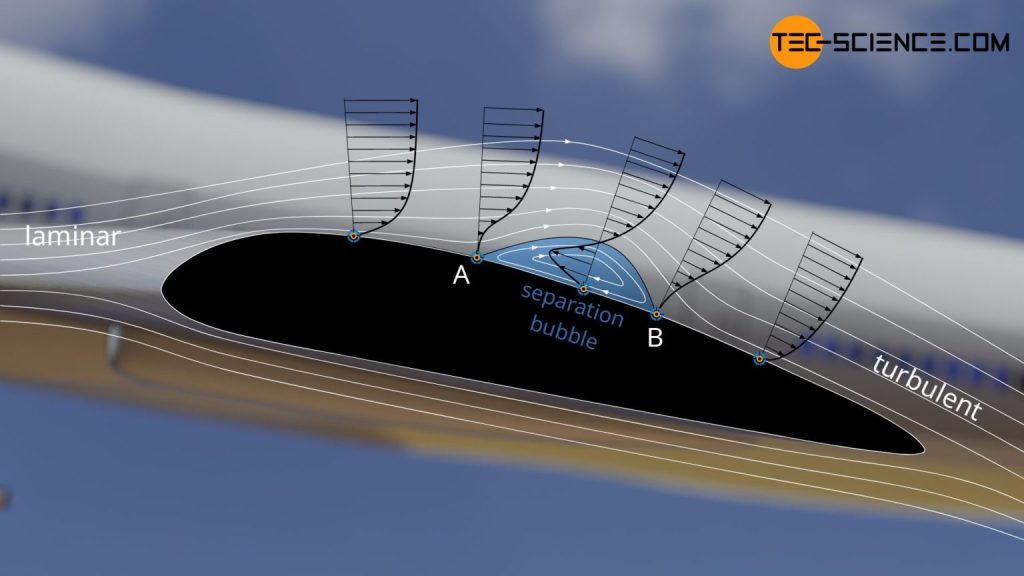
This high-point spar did more than just enable high-alpha maneuvers. It also created a low-Reynolds number bubble (a small, circling airflow, aka LSB, Laminar Separation Bubble) on the upper surface that helped generate extra lift. Essentially, the altered flow paths on the upper surface creates a completely different and thicker airfoil. It is a fantastic high-lift device for low-Reynolds number airplanes. In fact, the Apache24s5, which won third place at the 2024 State competition, uses this exact design!
A few rare airfoils are specifically designed for these low-Reynolds-number flights, and some even feature a high-point ridge for that exact same purpose. I adapted one such low-Reynolds-number airfoil for one of my Remotely Piloted Vehicle (RPV) drones to carry a payload of several kilograms. For your next Wright Stuff design, you can decide whether you want to incorporate this high-point spar or experiment with other high-lift devices. We will discuss a few of these options and explore them further soon!
Keep asking amazing questions!
-AeroMartin 9/28/2026


Leave a comment